Magneto-acoustic rotation of transverse waves in 3He-B
J. A. Sauls, Y. Lee[*], T.M. Haard, and W.P.
Halperin
Department of Physics and Astronomy, Northwestern University,
Evanston IL 60208 U.S.A.
In superfluid 3He-B, the off-resonant coupling of the J
= 2-, M = ±1 order parameter
collective modes to transverse current excitations stabilizes propagating
transverse waves with low damping for frequencies above that of the J =
2- modes. Right- (RCP) and left circularly polarized (LCP) transverse
modes are degenerate in zero field; however, a magnetic field with H||q
lifts this degeneracy giving rise to the acoustic analog of circular birefringence
and an acoustic Faraday effect for linearly polarized transverse sound
waves [1].
We present theoretical results for the temperature, pressure and field
dependence of the Faraday rotation angle, and compare the theory with recent
measurements [2].
The analysis provides a direct measurement of the Landé g-factor
for the J = 2- modes, and new information on the magnitude of
f-wave pairing correlations in 3He-B.
The dispersion relation for RCP(+) and LCP(-) transverse current modes
is given by [1]
|
æ
ç
è |
w
q±vf |
ö
÷
ø |
2 |
= Ln + Ls |
w2
(w+iG)2-W2±(T,w,H) |
, |
|
(1) |
with Ln = [(Fs1)/15]
rn(w,T)
and
Ls = [(2Fs1)/75]
rs(w,T).
The restoring forces are provided by quasiparticle excitations (
~ rn), and pair excitations ( ~ rs),
with rs+rn
= 1. The condensate term dominates at low temperature (rs@
1), and is anomalously large when the sound frequency is near a resonant
frequency of the J = 2-, M = ±1
collective modes,
i.e. when
| D2±(w,H,T)
= (w+ iG)2
- W2±(w,H,T) |
<
~ |
0 . |
|
(2) |
The frequencies of the M = ±1 modes include
the Zeeman splitting,
| W2±
= wisq2(T) ±2
g(T) w wL(H,T)
, |
|
(3) |
where wisq(T) is the frequency of
the J = 2- modes in zero field, g(T) is the g-factor for the
J = 2- modes and
wL(H,T)
= geff H is
the effective Larmor frequency that determines the linear Zeeman splitting
of the J = 2 multiplets [3].
Consider a linearly polarized transverse current excitation with frequency
w
propagating in the z-direction. The RCP and LCP modes propagate in the
bulk with different phase velocities,
| J(w,z) = |
J
Ö2 |
eiq+(w)z |
^
e |
+ |
+ |
J
Ö2 |
eiq-(w)z |
^
e |
- |
, |
|
(4) |
where [^(e)]± = ([^(x)]±i[^(y)])/Ö2
are the polarization vectors for RCP and LCP current modes. The response
corresponds to a pure Faraday rotation of the polarization if the phase
velocities are real, which is the case at very low temperatures (T <<
Tc) and frequencies above the collective mode resonances (|w-
W±(T)|
>> G). The transverse wave propagates with the
average phase velocity, [`c] = 2w/(q++q-),
while the polarization rotates with a spatial period, LH(w,T)
= 4p/|q+
- q-|.
Near the M = +1 mode crossing (w = W+(T+))
the temperature dependence of the Faraday rotation period is dominated
by q+(T) @ qf Ö{s(T/T+
-1)}, where qf = w/vf
and s º 2|W+¢|T+/LsW+
are evaluated at T = T+. The field dependence of LH
originates from the Zeeman splitting of the M = ±1
modes, and appears through the shift in the wavenumber of the LCP mode.
Using D-2 = D+2 +4 g(T) wwL(T,H)
we can write, q-@ qfÖ{s(T/T+-1)+B/B+},
where we set g = g(T+) for low fields, gwL
<< W+, and T ~
T+. The formula for q-(T) also simplifies because
Ln
D-2(T) <<
Lsw2.
The field dependence is determined by the field scale, B+ ºLsW+/4
g geff, where
geff,
is the effective gyromagnetic ratio. Thus, near the mode crossing the Faraday
rotation period simplifies to
where lf = 4pvf/W+,
a
= s (T/T+ -1), and
b = H/B+.
Except for temperatures very close to the collective mode resonance or
for very low fields; i.e. for s(T/T+-1) > H/B+, LH
scales inversely with H and as the square root of the reduced temperature,
LH@
KÖ{T/T+-1}/H, where K @xW(pvf/geff
g)Ö{[2/25](m*/m-1)rs/r}
is determined by the effective mass, superfluid density, gyromagnetic ratio,
Landé g-factor for the modes, and the slope of the collective mode
frequency, which is approximately
xW
= 8|W+¢|T+/W+@
1 at T @ 0.44 Tc. Recent experimental
measurements of the Faraday rotation angle [2]
confirm this scaling behavior. A quantitative comparison between the theory
and experimental measurements of the Faraday rotation period as a function
of temperature, pressure and field can be made on the basis of Eq. 5.
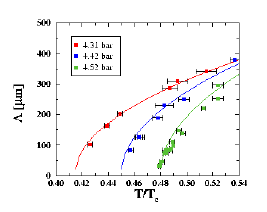
Figure 1: Comparison between the theoretical and experimental
results for the temperature dependence of the Faraday rotation period for
a field of H = 100 Gauss, frequency of w/2p
= 82.26 MHz at pressures,
p = 4.31 bar ( ),
p = 4.42 bar (
 ),
and p = 4.52 bar (
 )
[2].
Fig. 1 shows the comparison between
the theoretical and experimental results for the temperature dependence
of the Faraday rotation period scaled to H = 100 Gauss for three pressures
near 4 bar. The inputs to the theoretical calculation are: the Fermi liquid
parameters, Tc, vf, F1s, F0a
[3],
the mode data, T+/Tc and w,
and the gyromagnetic ratio for 3He. The calculated parameters
that enter Eq.
5 are the effective Larmor
frequency, wL = geffH,
the condensate response, rs(w,T+)
and the slope of the mode frequency,
|W+¢|T+.
The remaining open parameter is the Landé g-factor which determines
the vertical scale for LH; the fit
to the data gives g = 0.02±0.002, which
is in agreement with theoretical calculations of the g-factor that include
attractive f-wave pairing correlations in 3He-B[4].
References
-
[1]
-
Moores, G. F. and Sauls, J. A. J. Low Temp. Phys., 91,
13, 1993.
-
[2]
-
Lee, Y., et al., Nature, 400 431 (1999).
-
[3]
-
Halperin, W. P. and Varoquaux, E., ``Order Parameter Collective Modes in
Superfluid 3He,'' in Helium Three (Halperin, W. P. and
Pitaevskii, L. P., eds.), 353, Amsterdam: Elsevier Science Publishers,
1990.
-
[4]
-
Sauls, J. A. and Serene, J. W. Phys. Rev. Lett., 49,
1183, 1982.
Footnotes:
*present address: Department of
Physics, Stanford University, Stanford CA 94305 U.S.A.
File translated from TEX by
TTH, version 2.30.
On 11 Aug 1999, 04:47.